

Chairman Rick Scott Exposes How Overseas Drugs Harm Americans During Aging Committee Hearing
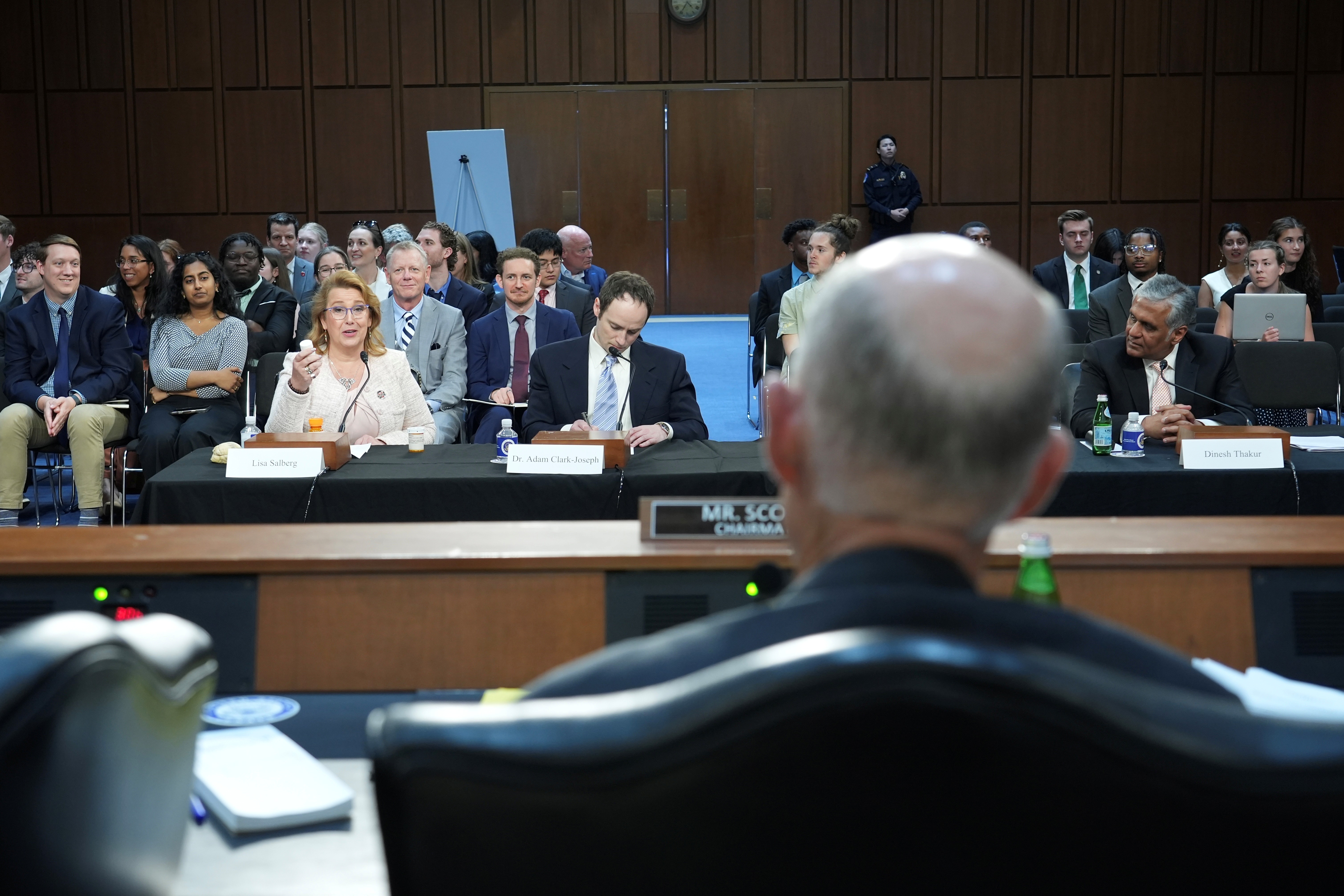
WASHINGTON, D.C. — Today, Special Committee on Aging Chairman Rick Scott led a hearing titled “Poisoned Pills: The Human Cost of Dangerous Foreign Drugs” to highlight how substandard and contaminated drugs manufactured overseas, particularly in India and China, harm American patients, undermine trust in generics, and expose weaknesses in FDA’s foreign inspection and oversight system.
The Consumer Labeling for Enhanced API Reporting and Legitimate Accountability for Base Entity Listings (CLEAR LABELS) Act, introduced by Chairman Scott in January 2026, addresses these concerns by adding country of origin labeling requirements to the U.S.’s prescription drug supply chain.
Chairman Scott’s witnesses for the hearing included:
- Lisa Salberg, Founder & CEO, Hypertrophic Cardiomyopathy Association, Denville, NJ
- Adam Clark-Joseph, PhD, Chief Analytics Officer and Co-Founder, Valisure, New Haven, CT
- Suzanne de la Monte, MD, MPH, Professor and Vice Chair of Pathology & Laboratory Medicine, Alpert Medical School of Brown University, Providence, RI
- Dinesh Thakur, Public Health Activist, St. Petersburg, FL
In October 2025, Chairman Scott and Ranking Member Kirsten Gillibrand released an investigative report titled “Protecting Seniors’ Access to Essential Medications: Securing the Foreign Generic Pharmaceutical Supply Chain.” The report focused on America’s dangerous overreliance on foreign-made generic drugs, which are largely imported from India and China. According to a 2025 study, the occurrence of serious adverse events for generic drugs manufactured in India was 54% higher than for equivalent drugs that were manufactured in the United States. Adverse events were hospitalization, disability, and death. Chairman Scott has been a leading advocate for American drug supply chain transparency and reform.
Click HERE to watch Chairman Scott’s opening remarks.
Read Chairman Scott’s opening remarks below.
“This country has a big drug problem, and it’s not the one most people are thinking about when they say it
America’s drug supply is not secured, and American patients are in danger as a result. Congress needs to do everything it can to change that.
91% of prescriptions in the United States are for generic drugs, and many older Americans rely on one or more medications to lead healthy and happy lives.
This Congress, I’ve worked closely with Ranking Member Gillibrand to push the federal government to do everything it can to ensure older Americans have access to safe and high-quality drugs.
We’ve sent letters to the Secretaries of HHS, the Department of War, and the VA about our reliance on Communist China and India for generic drugs.
We’ve sent a letter to the FDA asking about foreign inspections and the quality of drugs coming into our country.
We also wrote letters to group purchasing organizations, distributors, and pharmacies, asking where they source their drugs and the information they have about low-quality foreign generics.
Last year, this Committee held three hearings on the quality of the medications seniors rely on.
First, we held a hearing on the quality problems with foreign generics and our reliance on Communist China and India for drugs.
We followed that up with a hearing on solutions on how to bring drug manufacturing back to the United States.
Then we heard from American drug manufacturers on the problems they face and what the federal government can do to help them.
This January, we held a hearing where I was proud to announce the CLEAR LABELS Act with Ranking Member Gillibrand, a bipartisan bill that would require manufacturers to disclose where the drug and drug ingredients or API are manufactured.
You know where your car is made, where the food you eat is from, but you don’t know where the medication you or a loved one takes comes from.
That doesn’t make any sense. I encourage all members of this committee to cosponsor this bill so that all Americans can know where their medications are manufactured.
At our last hearing on generic drugs in March, we brought in experts on Communist China to discuss how our overreliance on foreign drugs was no accident, but a very deliberate policy by the CCP and also Washington politicians choosing profits over patients.
But today, we want to focus on the real Americans that these low-quality foreign drugs are harming.
A researcher from Indiana University testified before this committee that generic drugs made in India have fifty four percent more serious adverse events than equivalent drugs made in the United States – including hospitalization, disability, and death.
That means American patients and their family members taking medications to manage health conditions or recover from illnesses or procedures are ending up in the hospital, potentially even dying.
This should never happen in our country, but it’s been going on for decades.
In 2008, contaminated heparin from Communist China killed nearly 100 Americans.
This was a lifesaving blood thinner medication that these people needed, and it killed them.
LeRoy Hubley lost his wife of 48 years, Bonnie, and his son, Randy, because of contaminated Heparin from Communist China.
They relied on this medication for their dialysis treatment they were undergoing due to a genetic kidney disease, and it killed them.
Those drugs never should have made it into our country, but there are sadly too many such stories.
In 2023, contaminated eye drops from India killed four people and blinded fourteen others.
This cannot keep happening. But as long as we are not regularly testing drugs coming from Communist China and India and lag behind in foreign inspections, poor quality drugs from these countries will keep coming into America.
Under the current framework, we simply cannot rely on the drugs coming from Communist China and India to be the same quality as drugs made right here in America.
It’s been almost two decades since the heparin incident and we’re even more reliant on Communist China and India for our medicines than we were then.
The bottom line is, foreign manufacturers are not being held to the same standards as domestic manufacturers. This lets bad actors cut corners.
And when it comes to patient safety, patients’ lives are on the line.
Here in the U.S., the FDA doesn’t announce when it goes to inspect a manufacturing facility. But overseas in Communist China and India, the majority of inspections are pre-announced, so they can clean up any problems that they’ve got.
While I support the FDA’s efforts to increase unannounced foreign inspections, inspections alone can’t solve this problem.
The problem is, the FDA relies on manufacturers to submit data on an honor system. Foreign manufacturers know this and bad actors are taking advantage of gaps in the FDA’s oversight.
We saw this in 2013, when Ranbaxy settled with the Department of Justice for $500 million dollars for falsifying data and systemic violations of FDA good manufacturing practices.
The FDA cannot trust foreign manufacturers that have a financial incentive to cut corners on quality to be honest brokers.
Congress needs to look at solutions to systemic gaps in the FDA’s ability to conduct oversight of foreign manufacturers.
The FDA considers all approved generics to be equivalent, but data shows us this is not the case. This is why testing drugs for quality is so, so important.
In our hearing in March, China Rx author Rosemary Gibson testified about the Department of War’s testing on generic drugs. What they have found so far is shocking.
Of thirteen medicines tested, fifteen percent were found to have serious manufacturing defects including containing toxins, carcinogens, and not dissolving properly.
These stories of bad-quality drugs coming from Communist China and India aren’t isolated incidents. The problem is systemic.
The federal government needs to do everything we can to make the drugs that Americans and seniors rely on here in America and bring manufacturing back here.
Put simply, a country that cannot provide for itself cannot protect itself, and it cannot remain safe, strong and prosperous in the long run. America is too great a country to be as vulnerable as we are on this matter.
When American manufacturing is not an option, we must turn to our allied nations with proven testing standards – not adversaries and bad actors who cut corners at the expense of American lives.
I hope that with today’s hearing, we can draw attention to the people and their family members who have been affected by these poor-quality foreign drugs.
We have a great witness panel here today who are advocates for transparency and patient safety and can speak to these longstanding quality issues with foreign generics.”
###
Legal Disclaimer:
EIN Presswire provides this news content "as is" without warranty of any kind. We do not accept any responsibility or liability for the accuracy, content, images, videos, licenses, completeness, legality, or reliability of the information contained in this article. If you have any complaints or copyright issues related to this article, kindly contact the author above.
